
There is a sentence that keeps returning in discussions about the digital world:
“If you don’t pay for the product, you are the product.”
It is correct — and still incomplete.
What we are witnessing today is not merely a new business model. It is an old power structure wearing a new interface.
History does not repeat itself verbatim.
It re-renders.
Empires once relied on gods, kings, churches, flags, uniforms. Authority needed to be visible, theatrical, embodied. Power demanded awe. Fear required proximity.
That phase is over.
Modern power is quieter.
Faster.
Algorithmic.
It does not command — it nudges.
It does not forbid — it optimizes.
It does not punish — it amplifies.
And above all: it does not rule bodies first.
It rules attention, emotion, and self-worth.
The Digital Arena
Social platforms did not invent human weakness. They industrialized it.
The hunger for recognition, belonging, validation — these are ancient. What is new is the automation of feedback and the weaponization of social response.
Likes, shares, comments are not neutral signals. They form a behavioral loop:
Anticipation
Reward
Anxiety
Withdrawal
Re-engagement
Neurologically, this is not a metaphor. It is measurable.
What rarely gets discussed is the shadow system attached to this loop:
For every moment of algorithmic affirmation, there exists the latent threat of algorithmic annihilation.
Digital mobs.
Shitstorms.
Public shaming without due process.
The medieval pillory required a town square.
Today it requires a trending hashtag.
Hunger Games, Without the Arena
This is why comparisons to dystopian fiction resonate so strongly.
Not because we are oppressed by force — but because we are competing under invisible rules.
Visibility is scarce.
Silence is punishment.
Attention is survival.
The system does not need to decide who wins. It only needs to decide who is seen.
And unlike historical tyrannies, this one does not announce itself. It presents as entertainment. As convenience. As connection.
The cruelty is not explicit.
It is statistical.
Data, Sovereignty, and the Illusion of Consent
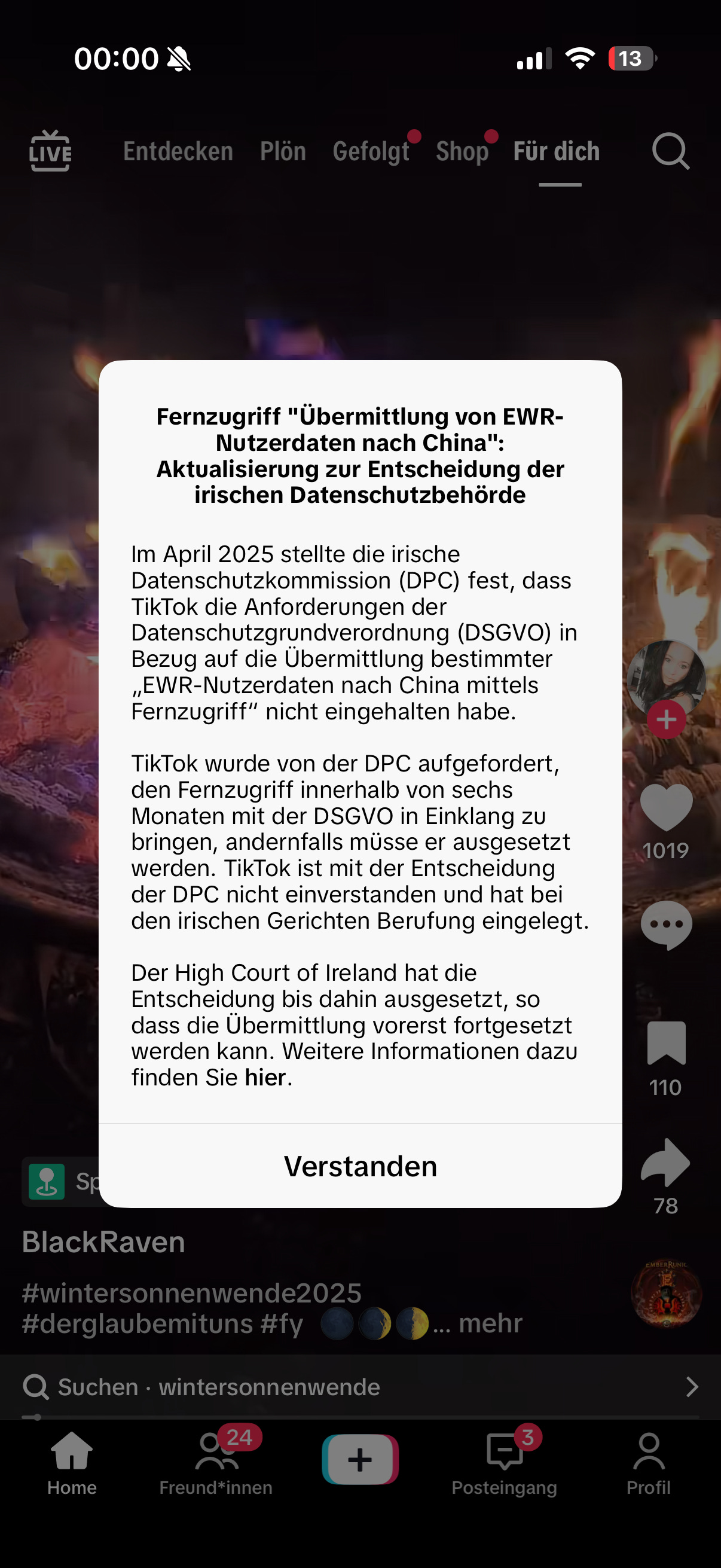
Recent debates around data transfers, cross-border access, and “remote processing” miss a deeper point.
The real issue is not where the data goes.
It is that human behavior itself has become extractable.
Consent dialogs simulate choice.
Legal compliance simulates control.
Transparency reports simulate accountability.
Meanwhile, behavioral prediction becomes ever more precise, and influence ever less visible.
Power no longer needs ideology.
It needs patterns.
Nothing About This Is New
Rome had bread and games.
Churches had salvation and damnation.
Totalitarian regimes had propaganda and fear.
Today’s systems have dopamine schedules and outrage dynamics.
The mechanics differ.
The logic does not.
What changes is the scale, the speed, and the subtlety.
Global instead of local.
Instant instead of gradual.
Psychological instead of physical.
Why This Matters Now
Because systems that operate below the threshold of conscious resistance are the hardest to challenge.
You cannot protest an algorithm you cannot see.
You cannot debate a metric that pretends to be neutral.
You cannot revolt against a system that convinces you your suffering is personal failure.
And yet, awareness matters.
Not panic.
Not moral grandstanding.
Awareness.
Understanding the system does not make you immune — but it gives you friction. And friction is where freedom begins.
A Quiet Choice
This is not a call to delete everything.
Nor a plea for technological purity.
It is an invitation to see clearly.
To notice when validation becomes dependency.
When discourse becomes performance.
When outrage becomes currency.
Power no longer wears crowns.
It wears interfaces.
And the first step toward reclaiming agency is simply refusing to confuse convenience with neutrality — or visibility with worth.

