
Lessons from Northern and Eastern Europe Without Romanticizing Them
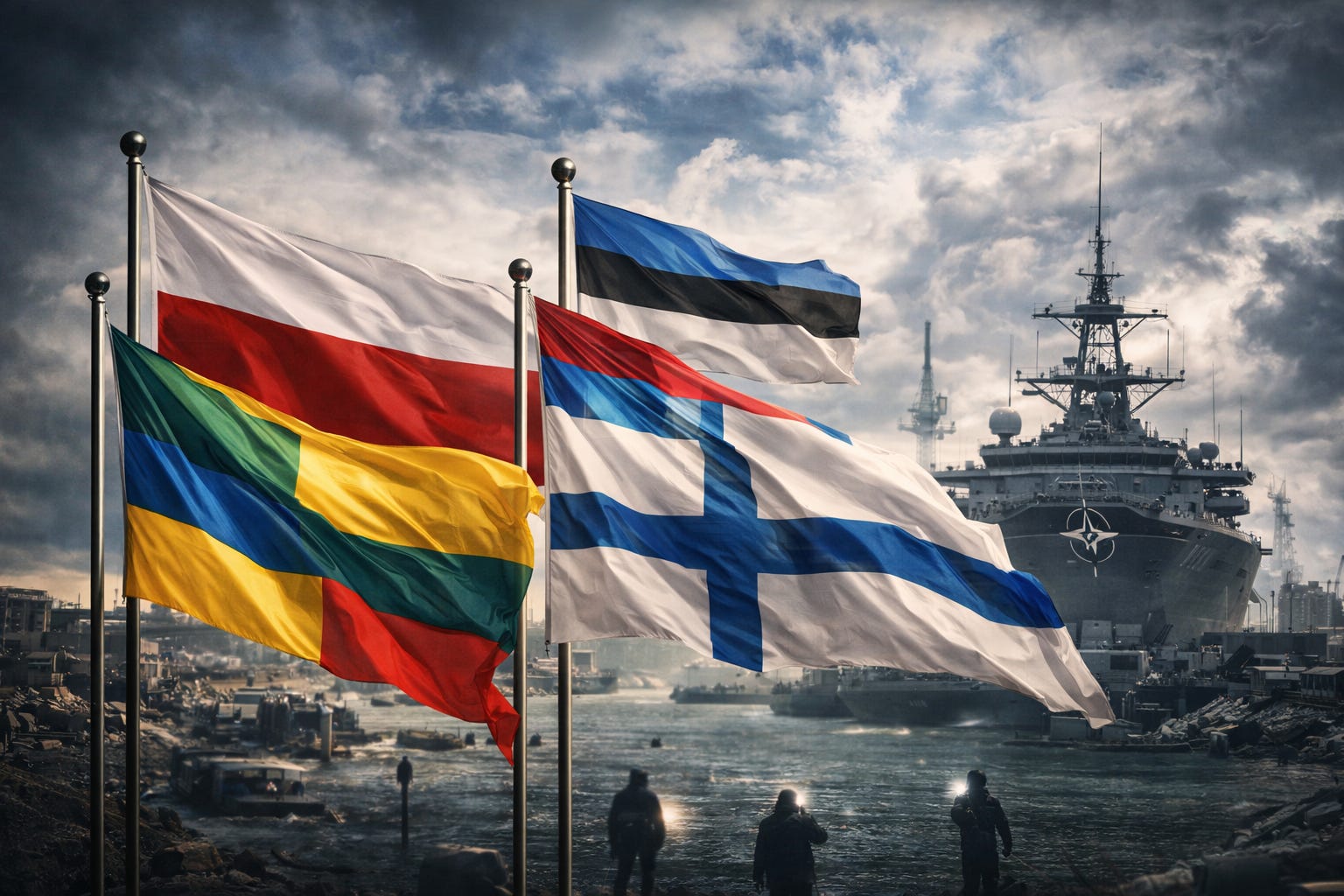
Comparisons often invite simplification. When discussing resilience, Northern and Eastern European countries are frequently portrayed as inherently more prepared, more disciplined, or culturally superior.
This analysis avoids that trap.
The differences that matter are not moral or genetic. They are structural, historical, and geographic— and therefore partially transferable.
Structural Exposure Shapes Behavior
Countries such as Poland, the Baltic states, and the Nordic nations share a common feature: exposure.
Geographic proximity to potential conflict zones
Sparse population density in parts of the territory
Climatic conditions that routinely disrupt infrastructure
Limited assumptions of immediate external assistance
In such environments, dependence on centralized response is risky by design.
As a result, preparedness has developed not as an emergency doctrine, but as a normal condition of citizenship.
Decentralization as a Practical Necessity
In many of these countries, state services cannot reach every location quickly — not because of inefficiency, but because of geography.
This reality produces a different social contract:
citizens are expected to bridge short-term disruptions themselves
local communities play a direct role in resilience
individual preparedness is socially normalized, not stigmatized
Preparedness is not framed as distrust in the state, but as cooperation with it.
Strategic Memory Matters
Historical experience plays a decisive role.
Societies that have:
experienced occupation
lived under systemic threat
faced repeated disruption retain a collective memory of vulnerability.
This memory translates into:
lower tolerance for complacency
higher acceptance of preventive measures
less surprise when risks materialize
Preparedness is not a reaction to fear, it is a response to experience.
The Nordic Model: Calm, Not Carelessness
Scandinavian countries are often perceived as calm and stable. This calm, however, is not rooted in optimism — but in routine readiness.
Civil defense concepts, reserve systems, and public guidance are not treated as crisis measures. They are part of civic infrastructure.
Citizens are informed early. Expectations are communicated clearly. Responsibility is shared.
The result is not alarmism, but predictability under stress.
Why Direct Transfer Does Not Work
Germany and parts of Western Europe differ structurally:
higher population density
stronger reliance on centralized infrastructure
long periods of perceived stability
deeply embedded trust in institutional continuity
These factors have produced legitimate expectations — but also blind spots.
Attempting to copy foreign models without adaptation would fail. Resilience cannot be imported wholesale.
What Is Transferable
Three elements, however, are adaptable:
Normalization of Preparedness Preparedness should not be framed as exceptional or fringe, but as ordinary civic competence.
Clear Responsibility Boundaries Citizens must know what the state will provide — and what they are expected to handle themselves for limited periods.
Early Communication Without Drama Honest, early communication builds trust and reduces panic when disruption occurs.
These measures do not weaken the welfare state. They strengthen it by reducing overload during crises.
Germany’s Specific Challenge
Germany occupies a unique position:
geostrategically central
economically interconnected
politically influential
structurally dependent on stability
This centrality amplifies both responsibility and vulnerability.
Germany cannot rely solely on reactive resilience. It must develop anticipatory capacity — not because it seeks leadership, but because disruption elsewhere propagates through it.
Core Insight of This Section
Resilience is not a cultural trait. It is the outcome of exposure, memory, and institutional design.
Societies that appear better prepared are not braver. They are simply more accustomed to acting before certainty is complete.
Transition to Part 6
If Germany’s position amplifies both risk and responsibility, the question becomes unavoidable:
What does effective action look like for a central actor in an environment where time is compressed and stability cannot be assumed?
Part 6 addresses this question — not as a call for dominance, but as an examination of responsibility through implementation.


