
Part 4 — When Political Effectiveness Requires Time and Time Is Missing = When Preparedness Is Tested
Part 4 — When Preparedness Is Tested
The Berlin Blackout as a Reality Check for Reactive Resilience
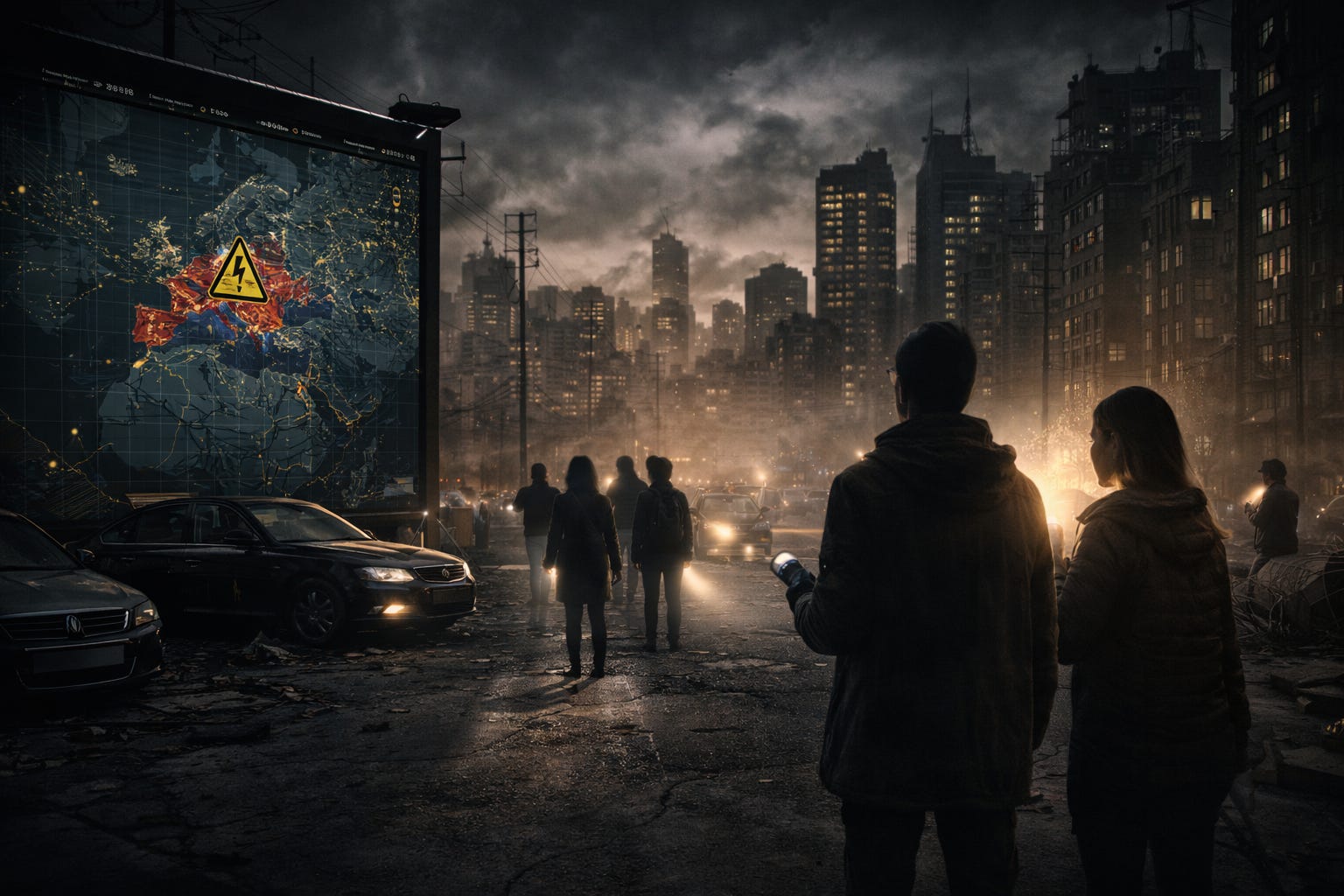
Preparedness is most often assessed in plans, strategies, and institutional charts. Its real quality, however, becomes visible only when systems are forced to operate outside routine conditions.
Localized breakdowns provide such moments.
In early 2026, a regional power outage in Berlin offered precisely this kind of stress test. Not a national catastrophe, not a systemic collapse — but a contained disruption under unfavorable conditions.
That makes the case analytically valuable.
The Event: Limited in Scope, Revealing in Effect
The blackout occurred during an unexpectedly cold period. While extreme cold is not unusual in itself, its occurrence within the broader context of climate volatility was entirely predictable.
Electricity supply was interrupted locally. Critical infrastructure remained largely functional. No cascading failure followed.
From a technical perspective, the situation was managed.
From a societal perspective, something else became visible.
Prepared Institutions, Unprepared Society
Formal preparedness frameworks functioned as intended. Emergency services responded. Authorities communicated status updates. Restoration timelines were provided.
What stood out was not institutional failure — but societal unpreparedness.
Many affected citizens:
lacked basic knowledge of how to behave during a blackout
had no access to alternative light or heat sources
relied entirely on mobile connectivity without fallback options
expressed confusion rather than panic — but also helplessness
This was not due to negligence. It was the result of cultural assumptions.
The Knowledge Gap Is Not the Problem
Guidelines for blackout preparedness exist. Authorities, civil protection agencies, and emergency services have published recommendations for years.
The issue is not availability of information. It is integration into everyday practice.
Preparedness remained abstract. It existed as documentation, not as habit.
As a result, when disruption occurred, many individuals encountered preparedness for the first time — precisely when they needed to act.
Social Media as an Indicator, Not a Cause
Public reaction on social media was instructive.
Rather than exchanging practical advice, much of the discourse focused on:
assigning blame
speculating about responsibility
demanding explanations
These reactions are understandable. They are also symptomatic.
In the absence of practiced self-efficacy, attention shifts outward. Responsibility is externalized. The system is asked to compensate for individual unpreparedness.
This dynamic does not weaken democracy — but it limits resilience.
Why Worse Outcomes Were Avoided
Notably, the situation did not escalate.
One reason was environmental: the cold limited social agitation. People stayed indoors. The disruption remained manageable.
This outcome should not reassure. It should warn.
A similar outage under different conditions — heat, longer duration, simultaneous disruptions — would have produced far more severe effects.
The system functioned not because it was fully resilient, but because circumstances were forgiving.
Preparedness as Culture, Not Administration
The Berlin case illustrates a core problem addressed throughout this analysis:
Preparedness that exists only at the administrative level does not translate into societal resilience.
Resilience emerges when:
basic preparedness becomes culturally normalized
citizens are enabled to act independently for limited periods
institutional response and individual competence complement each other
Without this alignment, even well-functioning institutions operate under unnecessary pressure.
The Deeper Pattern
The blackout did not reveal a technical failure. It revealed a temporal mismatch.
Preparedness was activated only once disruption occurred. Preventive integration into daily life had not taken place.
This mirrors the broader political pattern:
risks are known
frameworks exist
action begins only once escalation is undeniable
At that point, options are already constrained.
Core Insight of This Section
The Berlin blackout demonstrates that reactive preparedness manages disruption but does not reduce vulnerability.
Resilience is not tested in plans. It is tested in practice.
Systems that wait for events before activating preparedness will repeatedly discover that they are technically capable — but socially brittle.
Transition to Part 5
If preparedness must become cultural rather than administrative, comparison becomes essential.
Part 5 therefore examines how other European societies — particularly in Northern and Eastern Europe — have integrated resilience differently, and what structural lessons can be adapted rather than imitated.


